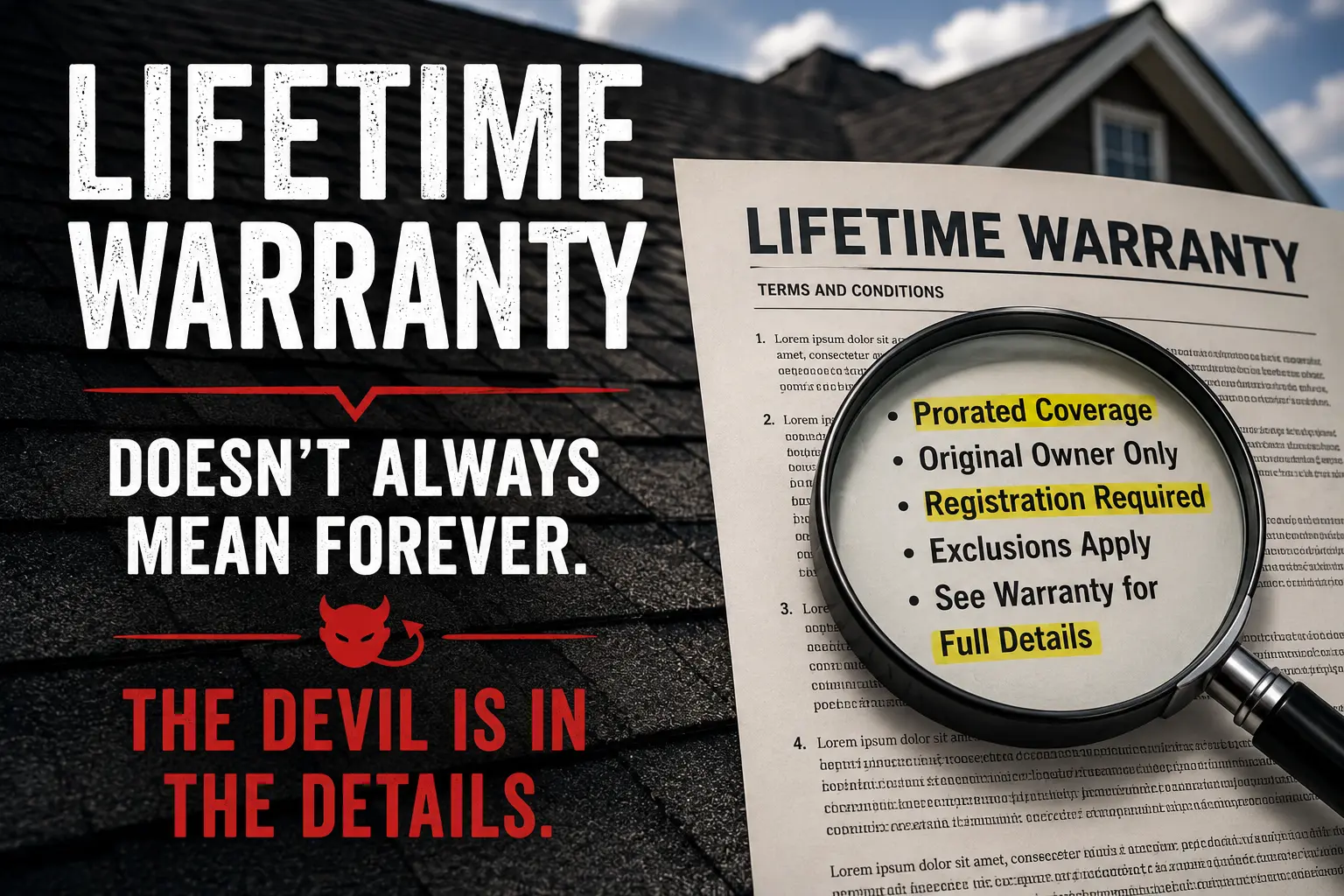
If you’ve collected a few roofing estimates, you’ve probably heard some version of:
“Don’t worry, it comes with a lifetime warranty.”
Sounds great, right?
The problem is that most homeowners hear the word lifetime and assume it means they’ll never have to worry about their roof again.
Unfortunately, that’s not usually how roofing warranties work.
Before you choose a contractor based on a warranty brochure, it’s worth understanding what you’re actually getting.
The First Thing to Know: There Are Different Types of Warranties
When someone says “lifetime warranty,” they may be referring to:
- A manufacturer material warranty
- A contractor workmanship warranty
- An enhanced system warranty
- Or some combination of the three
Those are very different things.
A manufacturer warranty generally covers defects in the roofing materials themselves. A workmanship warranty covers installation errors made by the contractor. Enhanced system warranties may combine both when specific products and installation requirements are met.
The Biggest Trap: “Lifetime” Doesn’t Mean Forever
Most standard lifetime shingle warranties are limited warranties covering manufacturing defects.
In many cases, “lifetime” means as long as the original homeowner owns the property—not that the manufacturer will pay for a full roof replacement forever. Coverage often changes over time and may become prorated after an initial full-coverage period. (GAF)
In plain English:
A roof problem in Year 5 and a roof problem in Year 25 may be treated very differently.
The older the roof gets, the less protection many standard warranties actually provide.
What Most Warranties Don’t Cover
This is where homeowners get surprised.
Many roofing warranties exclude:
- Storm damage
- Hail damage
- Wind events above warranty limits
- Poor attic ventilation
- Lack of maintenance
- Unauthorized repairs
- Normal aging and wear
- Problems caused by installation errors under a material-only warranty
In other words, just because something happened to your roof doesn’t automatically mean the warranty applies.
Material Defects Are Rare
This is something most roofing salespeople won’t tell you.
True manufacturing defects are relatively uncommon.
What we see far more often are installation issues, ventilation problems, flashing failures, storm damage, or simple age-related deterioration.
That’s why the workmanship side of a warranty can be just as important as the shingle warranty itself.
Where Owens Corning Preferred Protection Is Different
At Exterior Echelon, we’re an Owens Corning Preferred Contractor.
That gives our customers access to Owens Corning’s Preferred Protection Limited Lifetime Warranty when the roofing system meets eligibility requirements and is properly registered.
Unlike a basic material warranty, Preferred Protection adds workmanship coverage backed through the Owens Corning warranty program.
That means you’re not relying solely on the shingle manufacturer to cover material defects. The installation itself is also protected for a defined period when installed as a qualifying Owens Corning roofing system. Labor, tear-off, and disposal may be included for covered workmanship claims.
For homeowners, that’s a meaningful distinction.
Because if a roof ever experiences a problem, determining whether it was a material issue or an installation issue isn’t always straightforward.
Having both sides addressed provides a stronger level of protection than a standard material warranty alone.
The Question Every Homeowner Should Ask
Instead of asking:
“How long is the warranty?”
Ask:
“What exactly is covered, who backs it, and what happens if there’s a problem 10 years from now?”
That’s usually where the real value of a warranty becomes clear.
Our Take
A warranty should absolutely be part of your decision when choosing a roofing contractor—but not all warranties are created equal.
The strongest warranties aren’t simply pieces of paper. They’re a reflection of confidence.
When a manufacturer is willing to back not only their materials, but also the installation itself, they’re putting their reputation behind the contractor performing the work. That level of protection is typically reserved for contractors who meet specific standards for training, experience, professionalism, and installation quality.
That’s why it’s important to look beyond the word “lifetime” and ask who is actually standing behind the warranty.
Is it a material-only warranty?
Is the workmanship covered?
Is the warranty backed solely by the contractor, or by a major manufacturer as well?
The best long-term protection comes from combining quality materials, proper installation, and a warranty backed by a manufacturer that has confidence in both.
At Exterior Echelon, we’re proud to be an Owens Corning Preferred Contractor. That designation gives qualifying homeowners access to enhanced warranty options backed by one of the most recognized names in the roofing industry.
Because at the end of the day, a warranty is only as valuable as the company standing behind it.
