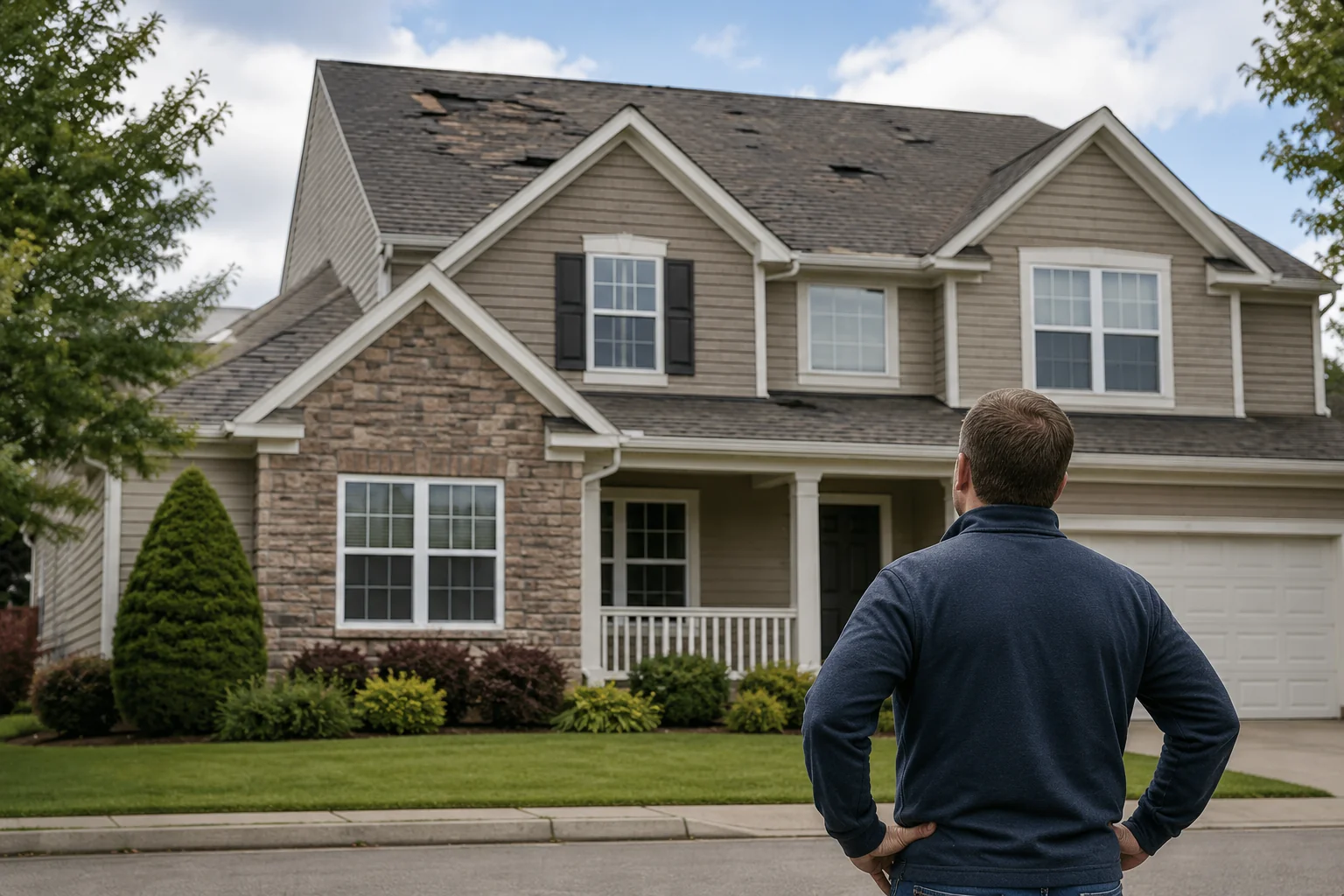
Storms happen. Shingles blow off. Hail falls. Trees come down. Water finds its way into places it shouldn't.
One of the first questions homeowners often ask is:
"Should I make an insurance claim?"
The answer isn't always as straightforward as many people think.
While insurance can be an invaluable tool when significant damage occurs, filing a claim is not automatically the right decision in every situation. Before contacting your insurance carrier, it helps to understand what insurance is designed to cover, how deductibles work, and whether a claim is likely to provide meaningful financial benefit.
Start With the Purpose of Insurance
Homeowners insurance is generally designed to help protect against sudden and accidental losses.
Examples may include:
- Wind damage
- Hail damage
- Fallen trees
- Fire damage
- Lightning strikes
- Certain water-related losses
Insurance is generally not intended to function as a maintenance plan or replacement program for aging building materials.
Problems that commonly fall into the maintenance category may include:
- Aging shingles
- Rotting wood
- Deteriorated caulking
- Corrosion
- Wear and tear
- Manufacturer defects
- Long-term deterioration
Understanding this distinction is important before deciding whether to file a claim.
Understand Your Deductible
One of the most overlooked factors is the deductible.
A deductible is the portion of a covered loss that the homeowner is responsible for paying.
For example:
- Roof repair cost: $2,500
- Insurance deductible: $2,500
In this scenario, the insurance company may pay little or nothing because the loss does not exceed the deductible.
Many homeowners are surprised to learn that not every repair automatically results in an insurance payment.
Before filing a claim, it is worth understanding both your deductible amount and the approximate cost of repairs.
Not Every Roofing Problem Is an Insurance Claim
As contractors, we regularly encounter situations where homeowners assume insurance should pay for a problem that is actually related to age or maintenance.
Examples include:
- A 25-year-old roof reaching the end of its service life
- Cedar siding deteriorating from age and exposure
- Rot around windows or trim
- Leaks caused by long-term maintenance issues
- Worn-out sealants and flashing materials
These situations can certainly require repair or replacement, but they may not represent a covered insurance loss.
When Filing a Claim May Make Sense
Insurance claims often make the most sense when there is evidence of a recent covered event and the damage is significant enough to justify involving the insurance company.
Examples may include:
- Widespread hail damage
- Significant wind damage
- Storm-related siding damage
- Tree impacts
- Structural damage
- Interior water damage resulting from a covered event
When repair costs substantially exceed the deductible, filing a claim may be worth considering.
Consider an Inspection Before Filing
One of the best ways to make an informed decision is to have the property evaluated before contacting your insurance carrier.
A professional inspection may help answer important questions such as:
- Is the damage consistent with a recent storm?
- Is the issue related to age or maintenance?
- Are repairs relatively minor?
- Does the damage appear significant enough to justify a claim?
Having this information upfront can help homeowners make a more informed decision and avoid unnecessary surprises.
Every Policy Is Different
Two neighboring homes can experience the same storm and receive very different claim outcomes.
Why?
Because coverage depends on many factors, including:
- Policy language
- Deductible amount
- Coverage endorsements
- Roof age
- Roof Payment Schedules (RPS)
- Actual Cash Value (ACV) provisions
- Replacement Cost Value (RCV) provisions
- Cause of loss
No contractor can guarantee that a claim will be approved.
Likewise, no contractor can guarantee what an insurance company will ultimately pay.
The Better Question
Instead of asking:
"Can I file a claim?"
A better question is:
"Does filing a claim make financial and practical sense for my situation?"
Sometimes the answer is absolutely yes.
Sometimes the better choice is handling the repair directly.
The key is making an informed decision based on the facts rather than assumptions.
Exterior Echelon Notes
If you suspect your home may have suffered storm damage, Exterior Echelon can perform an inspection and help you understand what we're seeing before you decide whether contacting your insurance carrier is the right next step.
Our goal is not to encourage every homeowner to file a claim. Our goal is to help homeowners understand their options and make informed decisions based on the condition of their property and the circumstances surrounding the damage.
