Most homeowners eventually experience some form of sticker shock when they receive their first roofing estimate.
Whether it’s $12,000, $18,000, or $25,000, the reaction is often the same:
“How did a roof get so expensive?”
It’s a fair question.
Many homeowners remember their parents replacing a roof for a fraction of today’s prices. Others see gas prices fall at the pump and assume roofing materials should become cheaper as well.
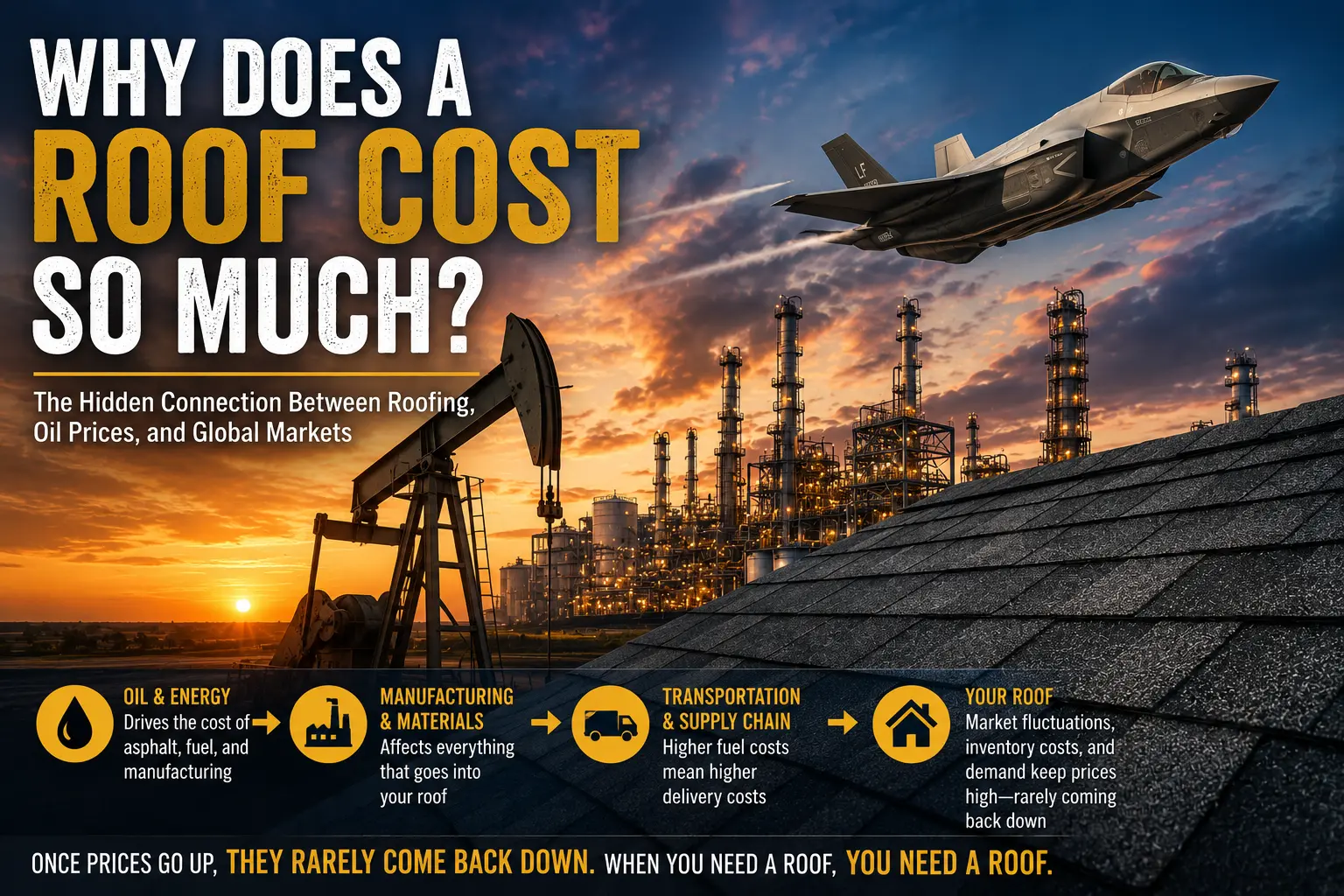
The reality is that roofing prices are influenced by much more than just shingles. In fact, the cost of a roof is tied to global energy markets, transportation networks, manufacturing costs, labor, insurance, and even world events happening thousands of miles away.
Let’s take a look at where your roofing dollars actually go.
Your Roof Is More Connected to the Oil Industry Than You Think
Most homeowners don’t realize how many roofing products originate from petroleum-based materials.
The most obvious example is asphalt shingles themselves.
Asphalt is a petroleum product, but that’s only part of the story.
Modern roofing systems also rely on:
- Synthetic underlayments
- Roofing sealants
- Pipe flashings
- Plastic roof vents
- Ice and water barriers
- Packaging materials
- Transportation fuel
Even products that aren’t made from petroleum are affected by energy costs required to manufacture and transport them.
When oil prices rise, those increases ripple throughout the entire roofing supply chain.
World Events Can Affect Roofing Prices
When homeowners hear about conflicts overseas, shipping disruptions, refinery shutdowns, or energy shortages, roofing materials probably aren’t the first thing that comes to mind.
But those events often affect the cost of producing and transporting building materials.
A refinery issue on the Gulf Coast.
A shipping disruption overseas.
A diesel fuel spike.
A manufacturing slowdown.
Each may seem unrelated to your roof, but they all contribute to the final price of materials arriving at your local supplier.
Roofing isn’t just a local business. It’s connected to a global supply chain.
Why Prices Go Up Quickly But Rarely Come Back Down
This is one of the most common questions we hear.
“If oil prices dropped, why didn’t roofing prices drop?”
The answer is inventory.
Imagine a roofing distributor purchases thousands of bundles of shingles after a manufacturer announces a price increase.
Those shingles are now sitting in warehouses at the higher cost.
Even if oil prices fall next month, that distributor still owns inventory purchased at elevated prices.
They can’t simply pretend they paid less for it.
That inventory has to move through the system before any lower-cost materials can begin affecting retail pricing.
This creates a lag that can last months.
Sometimes much longer.
The Reality of Modern Pricing
There is another factor homeowners should understand.
Once manufacturers, distributors, contractors, and consumers have adjusted to a new pricing level, there is often little pressure to reduce prices unless market conditions become extremely competitive.
That’s not unique to roofing.
It’s true across many industries.
Businesses plan around current costs, labor rates, transportation expenses, insurance premiums, and overhead.
When those costs increase, the new pricing structure often becomes the industry’s new baseline.
Some costs may soften over time.
Very few return to where they were years earlier.
Why Roofing Doesn’t Behave Like Gasoline
Gasoline prices can change almost overnight.
You can drive past the same station one week and see a completely different price the next.
Roofing materials don’t move through the system that quickly.
Manufacturers schedule production months in advance.
Distributors purchase inventory in large quantities.
Warehouses maintain stock levels.
Contractors quote projects weeks or months before installation.
The entire supply chain moves more slowly than the local gas station on the corner.
As a result, roofing prices tend to respond more gradually to market changes.
It’s Not Just Materials
When homeowners think about a roofing estimate, they often focus on the shingles.
But shingles are only one piece of the puzzle.
A roofing project also includes:
- Skilled labor
- Safety equipment
- Liability insurance
- Workers compensation insurance
- Dump fees
- Fuel costs
- Vehicles
- Equipment
- Permits when required
- Administrative expenses
- Warranty support
Every one of those categories has become more expensive over the last decade.
The Difference Between a Want and a Need
Perhaps the biggest reason roofing prices remain relatively stable is simple:
A roof isn’t a luxury purchase.
Most homeowners don’t wake up one morning and decide they want a new roof for fun.
Roofs are typically replaced because they have reached the end of their service life, suffered storm damage, or are actively causing problems.
When your roof is failing, waiting indefinitely usually isn’t an option.
That makes roofing fundamentally different from many consumer purchases.
It’s a necessity.
Our Take
The cost of a roof isn’t determined by shingles alone.
It’s influenced by energy markets, manufacturing, transportation, labor, insurance, inventory costs, and global economic conditions.
That’s why a roof that cost $6,000 twenty years ago may cost two or three times that amount today.
While prices may occasionally stabilize or soften, history has shown that major increases tend to become the new normal over time.
The next time you receive a roofing estimate, remember that you’re not simply purchasing shingles.
You’re purchasing a complete roofing system delivered through a supply chain that stretches from oil fields and refineries to manufacturers, distributors, and finally your home.
Understanding that process won’t make a roof cheaper.
But it may help explain why it costs what it does.
