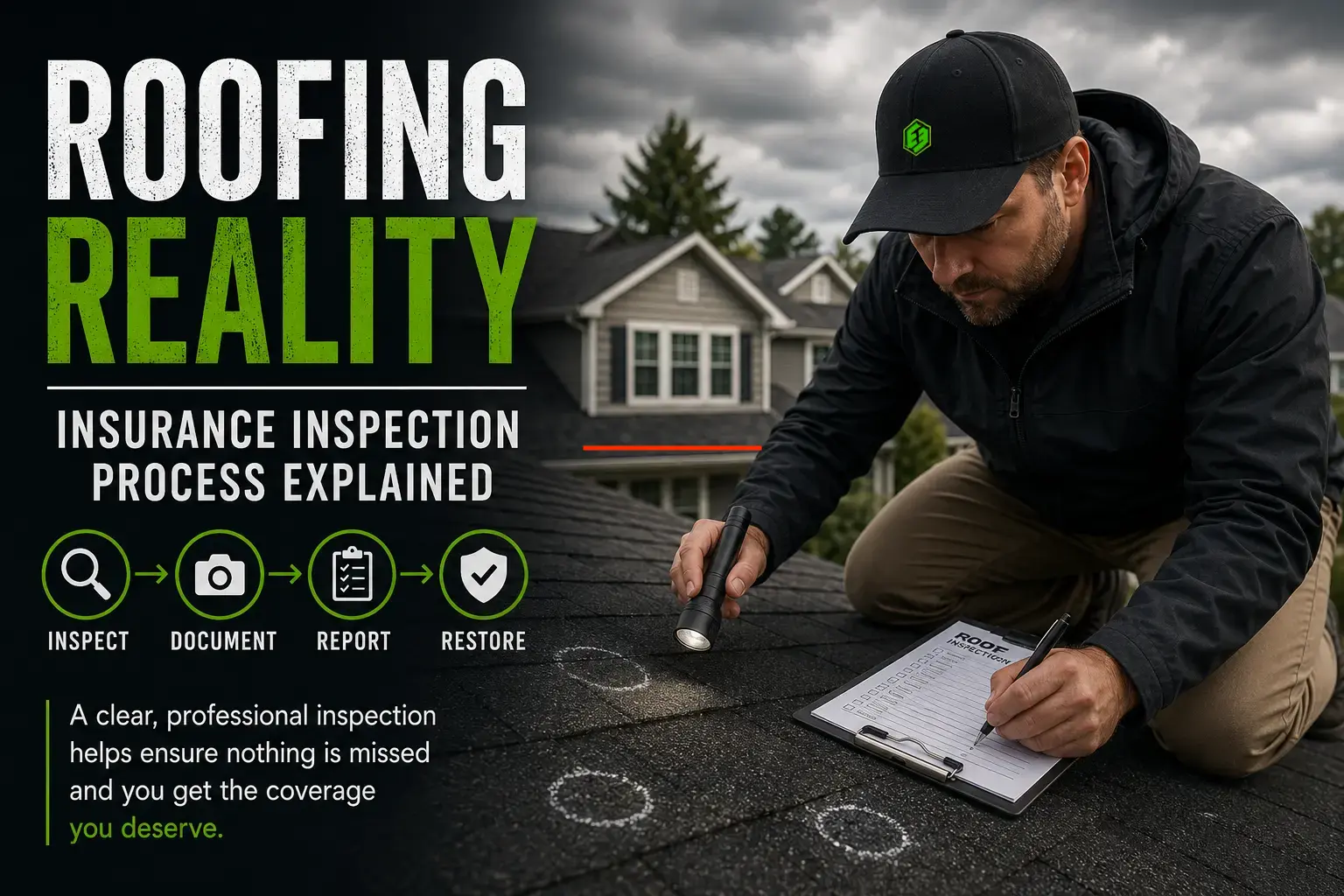
If you’ve never filed a homeowners insurance claim for storm damage, the process can seem confusing. One of the most common questions we hear is:
“What exactly are you looking for when you inspect my roof?”
The answer is simple: we’re looking for evidence that Mother Nature damaged your home—not normal aging or wear and tear.
Here’s what that process typically looks like.
Step 1: We Start With the Homeowner’s Story
Before anyone climbs a ladder, we want to know what happened.
Did you notice:
- Shingles in your yard?
- A water stain on the ceiling?
- A recent hailstorm?
- Strong winds?
- A tree branch hit the house?
Even if you’re not sure exactly when the damage occurred, your observations help us know where to look.
Step 2: We Look for Signs of Wind Damage
Wind doesn’t always rip shingles completely off the roof.
Sometimes the damage is much more subtle.
We’re looking for things like:
- Creased shingles
- Torn seal strips
- Lifted shingles
- Missing shingles
- Exposed nail heads
- Broken ridge caps
- Damage around roof penetrations
A shingle may look perfectly fine from the ground while actually being compromised enough that it can no longer protect your home.
Step 3: We Look for Hail Damage
Hail damage is often misunderstood.
Contrary to popular belief, not every round mark on a roof is hail.
We’re looking for evidence such as:
- Fresh granule loss caused by impact
- Bruising that can be felt beneath the shingle surface
- Fractured asphalt matting
- Consistent impact patterns across multiple roof slopes
- Damage to soft metals like gutters, vents, flashing, and roof accessories
We also compare these findings with the age and condition of the roof to determine whether the damage is consistent with a recent storm event.
Step 4: We Inspect the Entire Exterior
Your roof is only part of the picture.
Storms rarely damage just one component of a home.
We also inspect:
- Gutters
- Downspouts
- Fascia
- Soffit
- Siding
- Window wraps
- Metal flashing
- Mailboxes
- Air conditioning fins
- Decking and outdoor structures when appropriate
These additional observations can help paint a more complete picture of how the storm affected the property.
Step 5: We Document Everything
Good documentation is one of the most important parts of the process.
We photograph:
- Overall roof elevations
- Individual damaged shingles
- Soft metal impacts
- Missing materials
- Any collateral damage
- Measurements when necessary
The goal isn’t to overwhelm anyone with pictures.
The goal is to provide clear evidence that supports our findings.
Step 6: If Storm Damage Appears Legitimate, You Contact Your Insurance Company
If our inspection indicates that your home has likely sustained storm damage, the next step is usually to contact your homeowners insurance company and open a claim.
The insurance company will schedule an inspection with one of their adjusters.
At this point, the decision is no longer ours.
The insurance carrier determines whether the observed damage is covered under your policy.
Step 7: We Meet With the Insurance Adjuster
Whenever possible, we like to be present during the insurance inspection.
Why?
Not to argue.
Not to pressure anyone.
Simply because we know what we observed during our inspection.
Sometimes damage can be difficult to see without someone pointing it out.
Having both parties inspect the roof together helps ensure nothing is overlooked.
Ultimately, the adjuster makes the coverage decision.
Step 8: If the Claim Is Approved
If your claim is approved, the insurance company prepares an estimate detailing the covered repairs.
We review that estimate with you.
Sometimes it includes everything needed.
Sometimes additional items become necessary after construction begins, such as damaged roof decking or code-required upgrades. If that happens, those items are documented and submitted to the insurance company for review as supplements.
The goal is simply to restore your home according to the terms of your policy and applicable building codes.
What If the Claim Isn’t Approved?
Not every roof qualifies for an insurance claim.
If the damage is determined to be normal aging, improper installation, lack of maintenance, or another non-covered cause, the insurance company may deny coverage.
If that happens, we’ll explain what we found and discuss your options for repair or replacement. We’ll also review the insurance estimate with you in case there are questions worth addressing, but we won’t recommend filing claims that aren’t supported by the condition of the roof.
Our Philosophy
At Exterior Echelon, we don’t believe every roof needs an insurance claim.
Sometimes a simple repair is the right answer.
Sometimes a roof has simply reached the end of its service life.
And sometimes a storm really does cause enough damage that insurance coverage is appropriate.
Our job is to inspect your home honestly, document what we find, and help you understand your options so you can make an informed decision.
If you think your home may have been damaged by a recent storm, we’d be happy to perform a thorough inspection and walk you through the process—whether the outcome is an insurance claim, a repair, or simply peace of mind.
